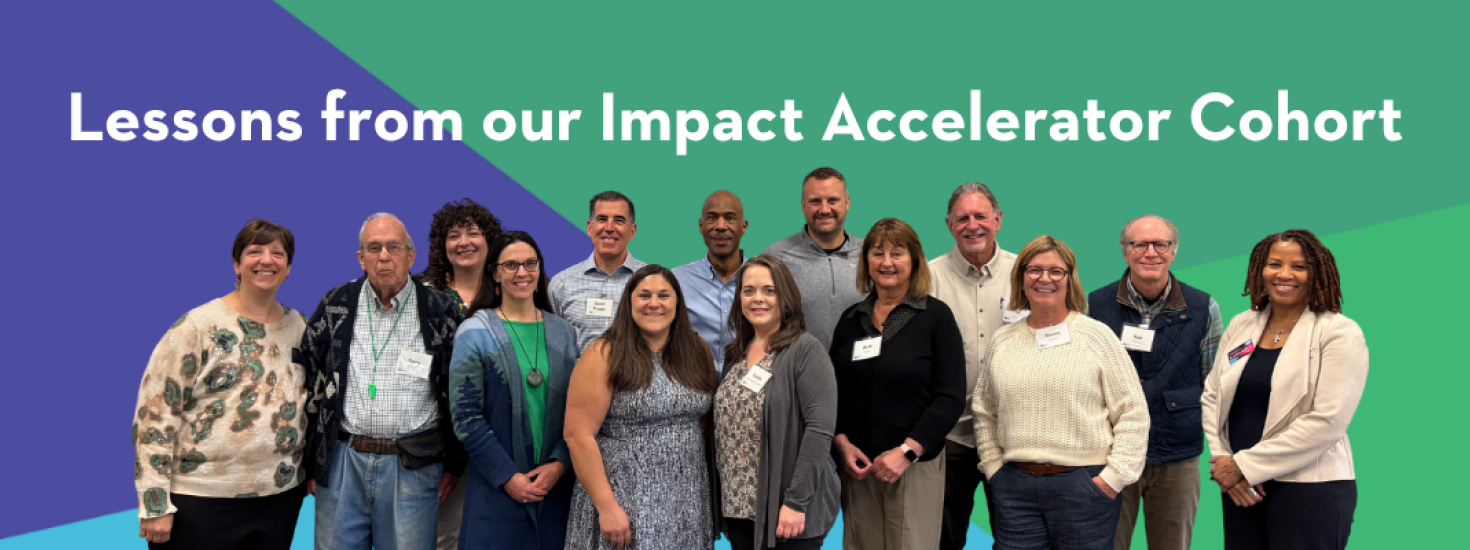
This past spring, Grand Rapids Community Foundation partnered with the Dorothy A. Johnson Center for Philanthropy to invite donors to take part in the Impact Accelerator Cohort. The four-week course took donor partners on a journey of reflection, facilitated online learning and discussions to create their personal giving plans.
Here are some of the lessons from the cohort that may help you on your giving journey.
1. Giving is personal and takes different shapes and sizes.
Before taking the course, many participating donor partners believed being a philanthropist meant being able to donate large sums of money. The course helped them realize there are many ways to give, including gifts of time, talent, testimony and networking. Participants learned that intangible gifts are just as impactful and that you “do what you can with what you have with where you are,” said Gene Lyons.
2. It’s important to know your why.
Philanthropy is deeply personal and everyone has a “why” for how they give and values that guide where they give. Through discussions, donor partners shared their passions for everything from youth development to environmental causes. For some, giving is influenced by family. One donor partner shared their inspiration comes from their grandma who believed “I have everything I need, there are people who need more.”
3. Anyone can be a philanthropist.
The word philanthropy translates to “the love of humanity,” and that’s something we can all do. One donor partner shared how they are raising their kids to be philanthropists through giving away toys they no longer play with. This simple act demonstrates that anyone can make an impact.
4. When you give, you are a part of a collective effort.
One part of the course that inspired participants was taking an inventory of their giving. Through this activity, they learned that small efforts combined with others make an even greater impact. While some expressed feeling like they were not making a difference with what they are able to give, through conversation donor partners helped each other realize that “each of us can give something so collectively we can make an impact.”
5. You’re not alone.
Another conversation that donor partners explored was the feeling of imposter syndrome in philanthropy. It can feel intimidating when you compare your giving to others, but everyone is in a different part of their journey and the cohort helped them see that as priorities change, so does giving. Through vulnerable conversations with others, participants were able to see how and why their giving matters.
Did any of these takeaways resonate with you? Interested in having a conversation with a member of our Development team? We are ready to talk to you! Please contact us through our website or by calling 616.454.1751.